A Practical Guide for Growing Businesses.
Brand identity is the visual and verbal expression of your brand. It is how your business looks, sounds and shows up across the different places people experience it.
It includes much more than your logo.
Your colours, typography, imagery, graphic style, tone of voice, website, social media and other brand touchpoints all contribute to how people experience your business.
But a strong brand identity isn’t simply about making a business look good.
It should help communicate who you are, what you stand for and how you want to be perceived.
This is where brand identity connects closely with brand strategy and messaging.
Your strategy provides the direction.
Your positioning helps define what you want to be known for.
Your messaging gives you the words.
Your brand identity brings those ideas to life.
So, what exactly is brand identity?
At its simplest, brand identity is the collection of visual and verbal elements a business intentionally creates to represent its brand.
It gives your business a recognisable and consistent presence.
This can include:
- Your logo
- Colour palette
- Typography
- Photography and imagery
- Graphic elements
- Icons and illustrations
- Layout and composition
- Brand patterns or textures
- Tone of voice
- Brand messaging
- Website design
- Marketing materials
- Social media graphics
- Packaging
- Presentations and proposals
The exact elements will vary from business to business.
What matters is that they work together to create a coherent expression of the brand.
A strong identity should feel like it belongs to the business.
It should also make sense to the people you’re trying to reach.
Is brand identity the same as a logo?
No.
This is probably one of the biggest misunderstandings around branding.
Your logo is one part of your brand identity.
It is an important visual asset because it helps identify your business, but it can’t communicate everything about your brand on its own.
Think about some of the brands you recognise immediately.
You may recognise them from a combination of their:
- Colours
- Typography
- Photography
- Packaging
- Shapes
- Layout
- Tone of voice
- Visual style
You might even recognise them before you see the logo.
That’s because a strong brand identity creates a system of recognisable elements, rather than relying on one symbol.
Your logo is the signature.
Your brand identity is the whole visual language.
Why does brand identity matter?
People form impressions quickly.
Before someone reads every word on your website or understands your full offering, they are already experiencing your brand visually.
Your identity can influence whether your business feels:
- Professional
- Credible
- Established
- Approachable
- Premium
- Innovative
- Considered
- Confident
- Relevant
Of course, design alone can’t create trust.
Your business still needs to deliver on the promise your brand makes.
But your identity can help create the right expectations.
A strong brand identity gives your audience a clearer sense of who you are before they even start working with you.
What are the key elements of a brand identity?
There isn’t one fixed formula for every brand.
A professional services business may need a different identity system from a food brand, retailer or technology company.
However, there are several common elements.
1. Logo
Your logo is one of the most recognisable parts of your identity.
It provides a visual identifier for your business and can appear across your website, social media, proposals, packaging, signage and other brand touchpoints.
A good logo should be appropriate for the brand and work effectively across different sizes and applications.
But it shouldn’t be expected to tell your entire brand story.
That’s the job of the wider identity system.
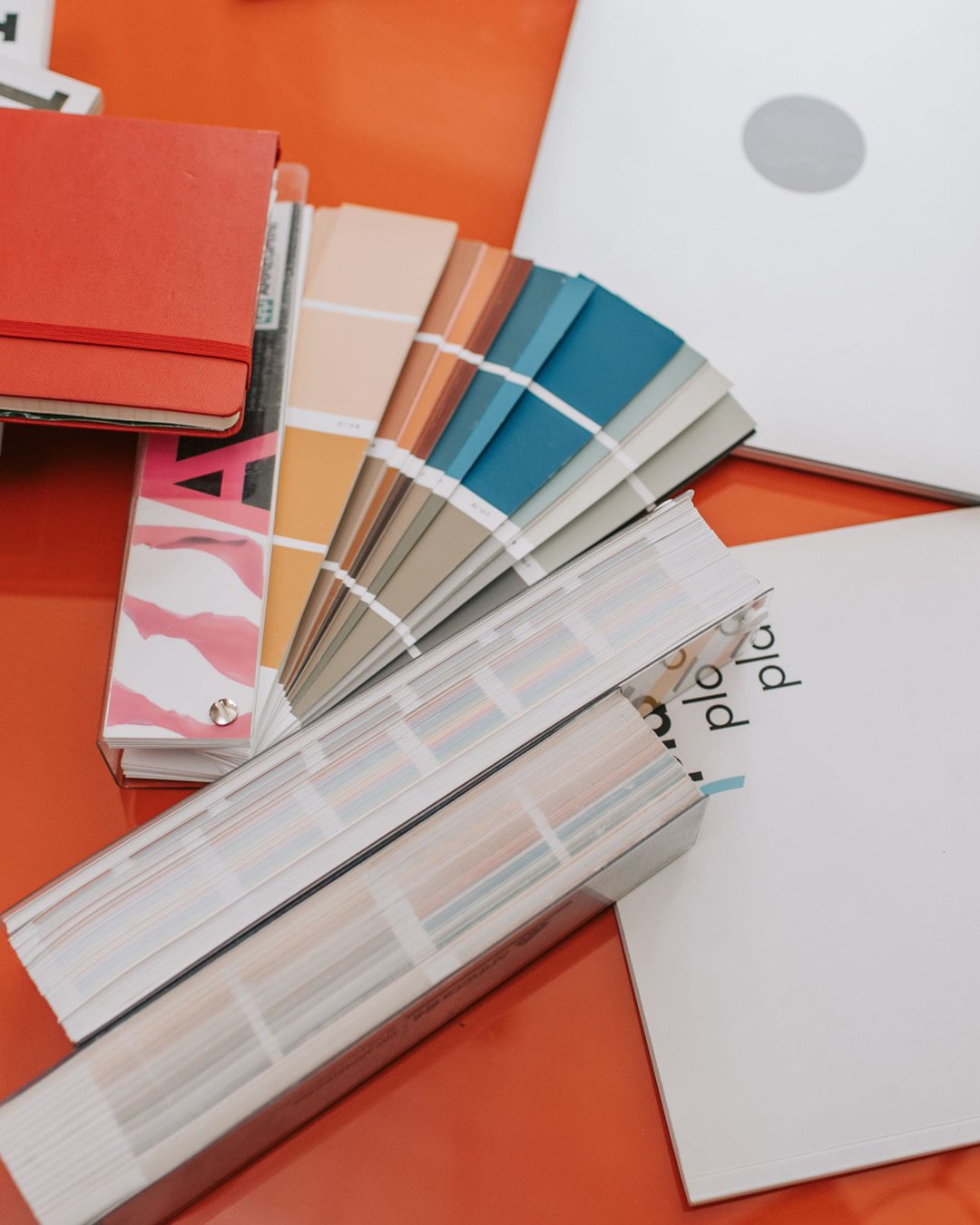
2. Colour
Colour plays an important role in creating recognition and emotional associations.
Your colour palette helps create consistency across your brand and gives your audience another visual cue to associate with your business.
A strategic colour palette isn’t simply about choosing your favourite colours.
It should consider:
- Your brand personality
- Your audience
- Your industry
- Your positioning
- Accessibility
- Where the colours will be used
- How the colours work together
The goal isn’t to follow colour psychology rules blindly.
It’s to create a palette that supports the personality and position of the brand.
3. Typography
Typography is often overlooked, but it can have a significant impact on how your brand feels.
A typeface can feel:
- Modern
- Traditional
- Friendly
- Editorial
- Technical
- Premium
- Playful
- Confident
Your typography system also needs to work practically.
It should be legible, accessible and flexible enough to work across your website, documents, social media and other communications.
4. Imagery
Photography and imagery can completely change the way a brand is perceived.
Think about whether your imagery feels:
- Natural or highly polished
- Warm or corporate
- Editorial or documentary
- Bold or understated
- Personal or product-focused
Your imagery should reinforce the story you’re trying to tell.
For service-based businesses, this can be particularly important.
The right imagery can help people understand the personality behind the business and create a stronger sense of connection.
5. Graphic elements
These are the visual details that help make a brand recognisable beyond its logo.
They might include:
- Shapes
- Lines
- Patterns
- Illustrations
- Icons
- Textures
- Frames
- Graphic treatments
These elements help create a visual system that can be adapted across different touchpoints.
6. Layout and composition
How your brand uses space can also become part of its identity.
Think about the way headlines, imagery, text and graphic elements are arranged.
A brand may use generous white space and restrained layouts to create a more premium feel.
Another may use bold typography, strong contrast and dynamic compositions to feel energetic.
There isn’t a right or wrong approach.
The layout should support the brand’s personality and purpose.
7. Tone of voice
Although brand identity is often thought of as visual, the way your business sounds is also part of the experience.
Your tone of voice helps create consistency in written and spoken communication.
It might be:
- Warm and conversational
- Direct and confident
- Thoughtful and considered
- Friendly and approachable
- Expert but accessible
Your visual identity and verbal identity should feel like they belong to the same brand.
What makes a strong brand identity?
A strong brand identity isn’t necessarily the most creative or visually impressive one.
It needs to be appropriate, distinctive, consistent and usable.
It is strategic
The identity should have a reason behind the creative decisions.
The colours, typography, imagery and visual style should support the positioning and personality of the brand.
It is recognisable
People should be able to start recognising your business through repeated visual and verbal cues.
It is distinctive
Your brand shouldn’t look like every other business in your category.
It doesn’t need to be completely unlike your competitors, but it should have its own point of view.
It is consistent
Your website, social media, presentations, proposals and other touchpoints should feel like they belong to the same brand.
It is flexible
Your identity needs to work in different situations.
A brand that only looks good on a website mock-up isn’t particularly useful.
It should work across the real world of your business.
It is practical
Your team should actually be able to use it.
A complicated identity that requires a designer for every small update can quickly become difficult to maintain.
Good identity design balances creativity with usability.
How does brand identity connect to brand strategy?
This is where the pieces of your brand start to come together.
Your brand strategy establishes the overall direction of your brand.
Your brand positioning defines the space you want to occupy and what you want to be known for.
Your brand messaging gives you the language to communicate that position.
Your brand identity gives those ideas a visual and verbal expression.
Think of it as:
Strategy → Positioning → Messaging → Identity
The identity shouldn’t be developed in isolation from the strategy.
If you skip the strategic thinking and go straight to design, you can end up choosing colours, fonts and styles because they look nice rather than because they are helping the business achieve something.
That can result in a brand that looks polished but doesn’t necessarily feel like you or connect with the right audience.
Why shouldn’t you start with the logo?
This is something I often encourage businesses to think about differently.
When you’re starting a business, it can be tempting to begin with:
“I need a logo.”
But the better question is:
“What does my brand need to communicate?”
Before you decide how your business should look, it helps to understand:
- Who you want to attract
- What you want to be known for
- What makes you valuable
- How you are positioned
- What your audience needs to understand
- What personality you want your brand to have
Once those decisions are clearer, the design has somewhere to go.
You’re not simply choosing a logo.
You’re creating an identity that supports the business.
What is a visual identity system?
A visual identity system is the collection of visual elements and rules that work together to create a consistent brand.
Rather than having a logo and a few colours, you have a system that tells you how the brand should be expressed.
This might include:
- Logo variations
- Colour palette
- Typography hierarchy
- Imagery direction
- Graphic elements
- Iconography
- Layout principles
- Social media templates
- Website design direction
- Print applications
A system gives your brand flexibility without losing consistency.
This becomes increasingly important as your business grows and more people become involved in creating or managing your communications.
What are brand guidelines?
Brand guidelines document how your identity should be used.
They can include things such as:
- Logo usage
- Colour specifications
- Typography
- Imagery
- Graphic elements
- Layout principles
- Tone of voice
- Examples of correct and incorrect usage
The level of detail should reflect the needs of the business.
A small business may need a straightforward guide that helps them confidently use their brand day to day.
A larger organisation with multiple teams, suppliers or locations may need a much more comprehensive system.
The goal isn’t to create a huge document for the sake of it.
The goal is to make your brand easier to use consistently.
When does a business need a new brand identity?
Not every business that feels frustrated with its branding needs a complete rebrand.
Sometimes you need a strategic refresh.
Sometimes the messaging needs attention.
Sometimes the website is the biggest issue.
And sometimes the visual identity genuinely no longer reflects the business.
Some common signs include:
Your business has evolved
The identity was created for the business you were a few years ago, but the business today is very different.
You have outgrown your original DIY branding
What worked when you were starting out may no longer reflect the level of business you’re operating today.
Your brand feels inconsistent
Different platforms, documents and marketing materials all look slightly different.
Your identity looks like everyone else
Your brand may be professional, but there is little visual distinction between you and your competitors.
Your audience has changed
Perhaps you’ve moved into a different market or started attracting a different type of client.
You’re embarrassed to send people to your website
This can be a useful signal.
If your visual identity no longer reflects the quality of the experience you provide, there may be a disconnect that needs attention.
Your identity no longer represents you
Sometimes the business has simply grown into something different.
Your brand should be able to evolve with it.
Does a rebrand always mean starting again?
No.
A rebrand can take many different forms.
You might need:
A brand refresh
Refining an existing identity while retaining recognisable elements.
A visual identity update
Updating typography, colour, imagery or other visual elements.
A messaging refresh
Clarifying what you say without significantly changing how you look.
A strategic repositioning
Changing how the business is positioned in the market, which may then require changes to the identity.
A complete rebrand
Reconsidering the strategic and creative foundations of the brand.
The right approach depends on the problem you’re trying to solve.
That’s why I believe it is important to understand the why before deciding on the what.
How long does a brand identity last?
There isn’t a fixed lifespan for a brand identity.
A well-designed identity can work for many years.
What matters is whether it continues to support the business and connect with its audience.
You don’t need to redesign your brand every few years simply because design trends have changed.
In fact, constantly changing your identity can make it harder to build recognition.
Instead, consider whether:
- Your business has changed
- Your audience has changed
- Your market has changed
- Your positioning has changed
- Your identity still feels relevant
- Your identity is still distinctive
- Your brand is being used consistently
Sometimes a few strategic refinements are all that’s needed.
What is the difference between brand identity and brand image?
These terms are sometimes used interchangeably, but there is an important distinction.
Brand identity is what you intentionally create and control.
It includes the visual and verbal elements you use to represent your business.
Brand image is how people actually perceive your business.
You can influence your brand image through your identity, messaging, customer experience and marketing, but ultimately you don’t have complete control over how people perceive you.
This is why a strong brand isn’t just about looking consistent.
The experience needs to support the promise you’re making.
If your brand looks professional but your customer experience doesn’t match, the identity alone can’t solve the problem.
Brand identity is more than making your business look good
Good design absolutely matters.
But the purpose of brand identity goes beyond aesthetics.
It should help your audience understand:
Who you are.
What you stand for.
What kind of experience they can expect.
And why your business is worth remembering.
When the strategy, messaging and identity work together, your brand becomes much more coherent.
Your website feels connected to your social media.
Your proposals feel connected to your website.
Your marketing feels like the same business.
And your audience starts to recognise the patterns.
That’s when identity becomes more than decoration.
It becomes a brand asset.
The real value of brand identity
For me, good brand identity design is about creating alignment between strategy and expression.
Your business may have a clear purpose.
Your positioning may be strong.
Your messaging may communicate your value beautifully.
But your visual identity is often the first thing people experience.
It needs to support the story.
A strong identity gives your business a visual presence that feels considered, credible and recognisable.
It gives you confidence when you show up online and offline.
And it creates a consistent foundation for everything from your website and social media to your proposals, presentations and marketing.
Most importantly, it should feel like a true expression of the business you’re building.
Ready for a brand identity that reflects where your business is going?
If your business has evolved but your visual identity hasn’t caught up, or you’re struggling to create consistency across your brand, it may be time to take a closer look at the bigger picture.
At Clariti Studio, I help growing businesses bring together brand strategy, positioning, messaging and identity, creating brands that are clearer, more consistent and more confident.
Because good design isn’t just about how your brand looks.
It’s about making sure what people see is aligned with what your business stands for.
Clarity creates confidence.


